
1 · Import
Bring pump data in from Excel, map it, and review what was read before it becomes library data.
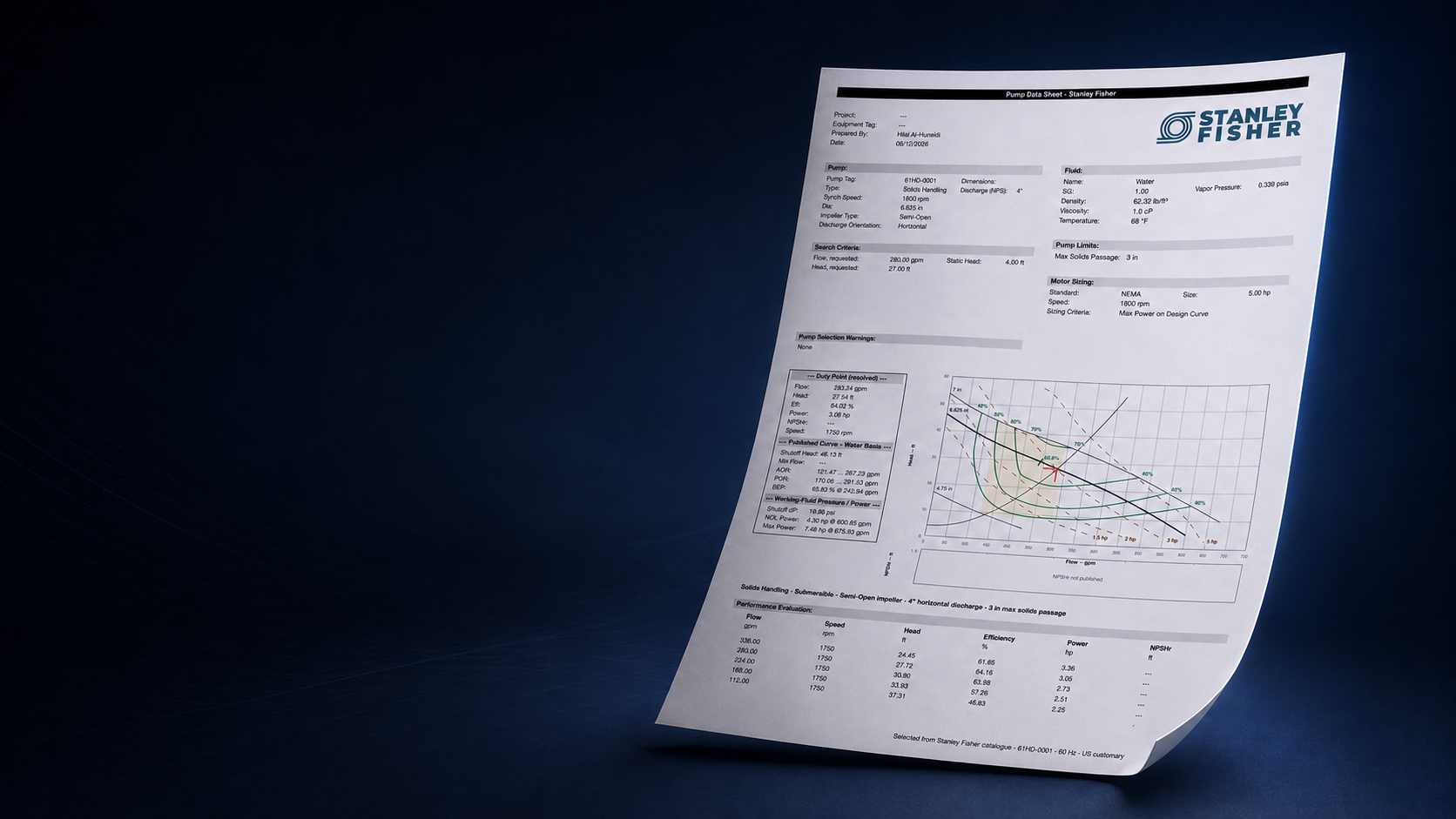
PRIVATE PUMP ENGINEERING WORKSPACE
Import your pump data, solve real duty points — glycol, oil, variable speed — inspect the engineering behind the answer, and produce the outputs your customer sees.
THE COMPLETE WORKFLOW
One connected path from the data you already hold to the document that leaves the building.
Bring pump data in from Excel, map it, and review what was read before it becomes library data.
A private, structured catalogue across the manufacturers you work with — curves, trims and speeds together.
Real duty points against your own pumps, in metric or US units, at 50 or 60 Hz.
Summary, chart, hydraulics and variable speed — the engineering behind the answer.
Professional outputs generated from the selection you reviewed.
SMART IMPORT
Your pumps already exist somewhere — usually a spreadsheet. Upload the Excel workbook and Floworx Lite reads the sheet, detects the columns and units, and shows you what it understood: values, trims and curve points, with diagnostics on anything ambiguous. You approve it before it becomes library data.
YOUR LIBRARY
Not a published catalogue — your own workspace, holding the pump records your organisation is authorised to use. Curves, impeller trims, connections and speed data live with the pump.
SELECTION
Enter the duty, run it against your own library, and read the engineering before you commit.
Flow, head, static head and NPSHa — metric or US, 50 or 60 Hz, against your system curve.
The calculated pump/system intersection on the curve that applies.
BEP, operating region, efficiency, absorbed power, NPSHr, rated diameter, speed and motor basis.
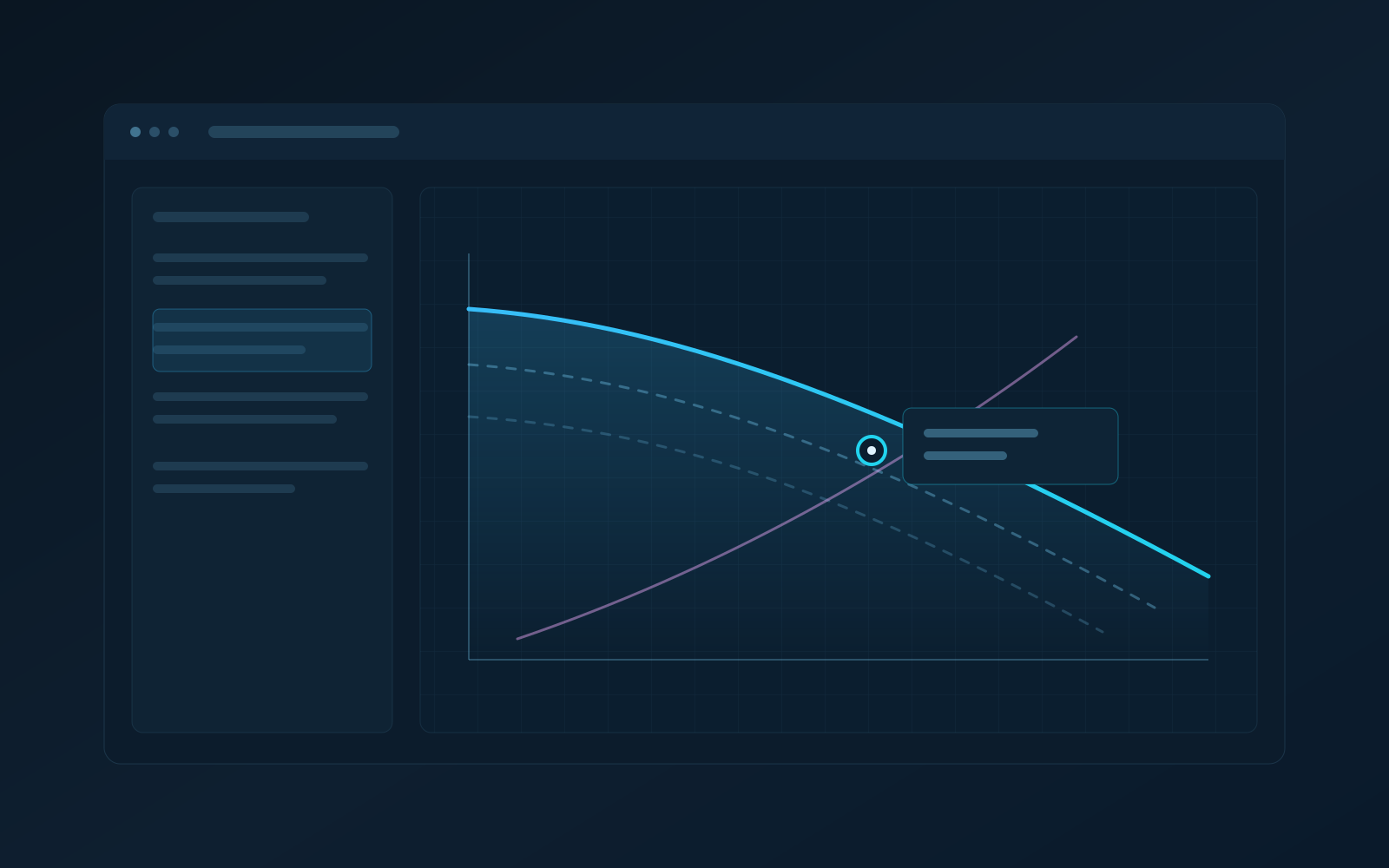
INTELLIGENCE
Summary for the resolved result, Chart for where it sits on the curve, Hydraulics for the operating basis and the corrected working fluid, Variable Speed for the solved speed family — the difference between a number you accept and a recommendation you can defend.
REAL FLUIDS
Water, light oil and inhibited glycol mixtures, at the concentration and temperature you are actually running — corrected point by point, with the properties used and where each came from.
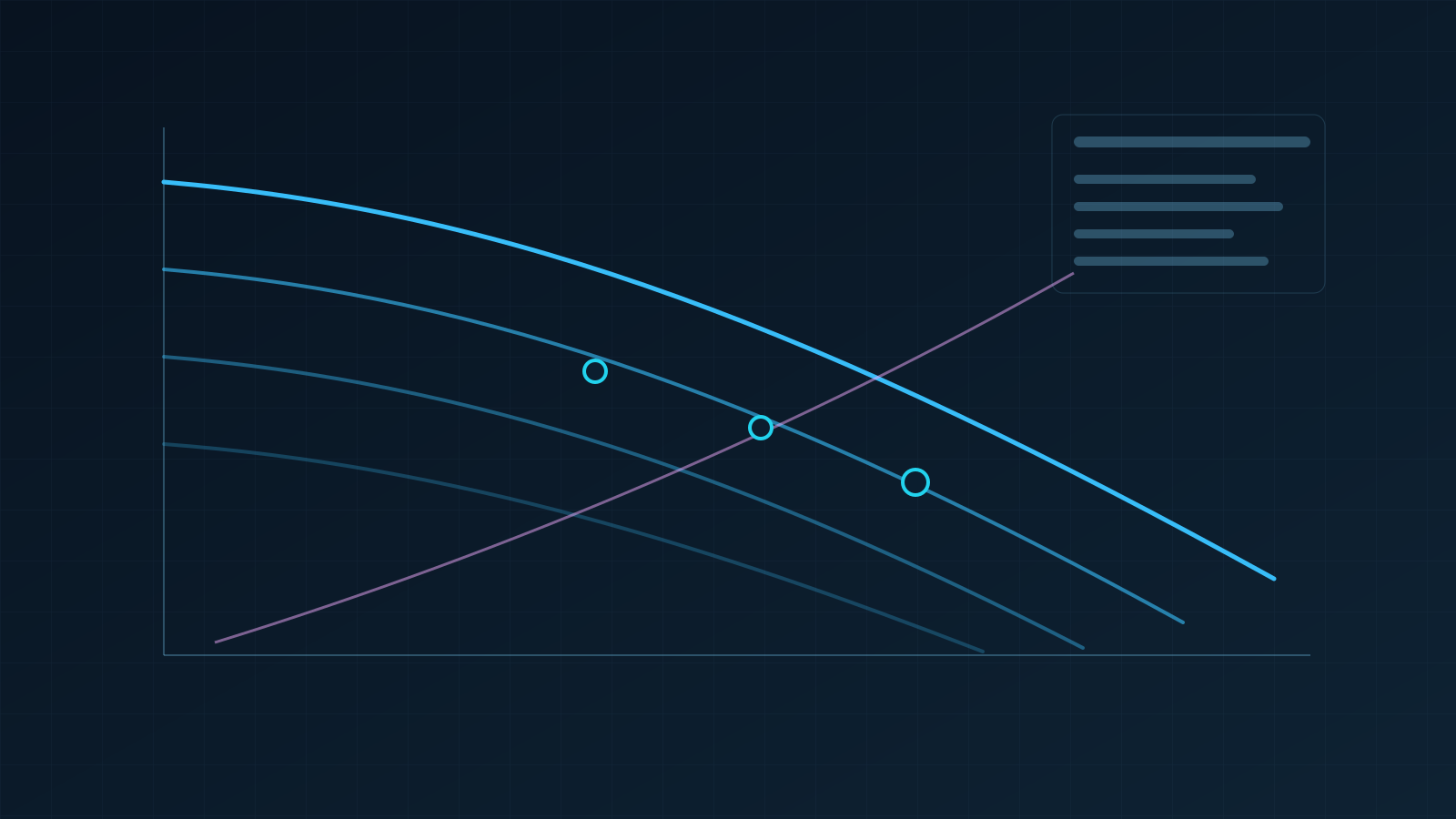
VARIABLE SPEED
Each additional duty is solved for the speed it requires — as a percentage of the published curve speed, as an equivalent frequency, and corrected at that speed.
PROFESSIONAL OUTPUT
Generated from the selection you reviewed, carrying your organisation’s name.
The duty, the selected pump, the resolved operating point and the basis it was solved on.
The curve and the duty exactly as they were reviewed.
The solved speed family and its operating conditions, where one was solved.
SEE THE BASIS, NOT JUST THE ANSWER
Source data and calculated performance remain clearly identified, so a recommendation can be reviewed rather than taken on faith.
Your curve data is used as published, and it stays visible as the basis of every result.
A viscous duty is solved on a corrected curve, and the published curve it came from is named alongside it.
Where a manufacturer never published NPSHr, the result reads n/a rather than a number you would have to catch.
A duty outside a curve’s domain is reported as such, so a result never travels further than the data behind it.
WHO IT IS FOR
The same workspace, read three ways.
Your reusable asset is the library you build and the documented selections that came out of it.
For engineersThe brands you represent, in one library, answered the same way by anyone on your team.
For distributorsProfessional internal selection for your applications team, on your own range, without building a selector.
For manufacturersStart here
Free
Start engineering with your own private three-pump library.
Individual
The complete professional workspace for one engineer.
Team
One shared engineering workspace — 3 seats included.
$69/month per additional seat as the team grows
Upload your Excel workbook, map the columns, and review what was read before it becomes library data. You can also create records by hand.
Records are scoped to your workspace and the roles you authorise. No public catalogue, no cross-customer visibility.
Both, inside the selection rather than in a separate calculator.
The Free plan is the real engineering product: your own private pump library, real duty points, real fluids, variable-speed analysis and the resolved operating point. No card and no sales call — start engineering right away.