
Import
Structured Excel, reviewed before use
CAPABILITIES
One workspace covering the whole chain: import, library, selection, Intelligence and professional output.
THE CHAIN
Each one hands the next everything it needs — no re-typing, no second spreadsheet.
Structured Excel, reviewed before use
Private, multi-manufacturer, reusable
Real duties on your own pumps
The engineering behind the answer
Professional outputs from the reviewed selection

01 — SMART IMPORT
Upload the Excel workbook your pumps already live in. Floworx Lite reads the sheet, detects the columns, units and decimal convention, and builds an import plan you review before anything is committed — values, impeller trims and curve points, with diagnostics on whatever was ambiguous. Records can also be authored by hand when that is the right workflow.
02 — PRIVATE PUMP LIBRARY
Records carry everything a selection needs, and stay searchable as the library grows.
Curve sets, published curve speed, impeller trims, connections and construction detail, held with the pump.
Search and filter by frequency, installation, pump type, lifecycle or curve state — a working library stops being browsable at about twenty pumps.
A record that cannot yet support a selection stays a draft, with the missing facts named: frequency and pole count, published curve speed, a performance curve.

03 — SELECTION
Enter flow, head, static head and NPSHa in metric or US units at 50 or 60 Hz, set the fluid and the acceptance grade, and run against your library. Candidates arrive with the full engineering identity — operating flow and head, NPSHr, efficiency at the operating point and at BEP, absorbed power, rated diameter, speed and motor basis — plus whether the result sits inside the tolerance you asked for.
04 — INTELLIGENCE
Open a candidate and four views answer the next question rather than restating the first.
The resolved result in one place: operating flow and head, efficiency, absorbed power, NPSHr, rated diameter, speed and motor basis.
Where the duty sits on the curve that applies, with the operating region around it.
The operating basis behind the number, including the corrected working fluid and the properties it used.
The solved speed family and its operating conditions, where a drive is part of the duty.
05 — REAL FLUIDS
Water, light oil and inhibited ethylene- or propylene-glycol/water mixtures, at your concentration and temperature. Performance is corrected point by point, the corrected basis is held for the duty state so the chart, the numbers and the document all read from it, and NPSHr is never corrected. Density, viscosity and specific gravity are shown with their provenance — including, where it applies, that a vapour pressure was not published by that source.

06 — VARIABLE SPEED / VFD
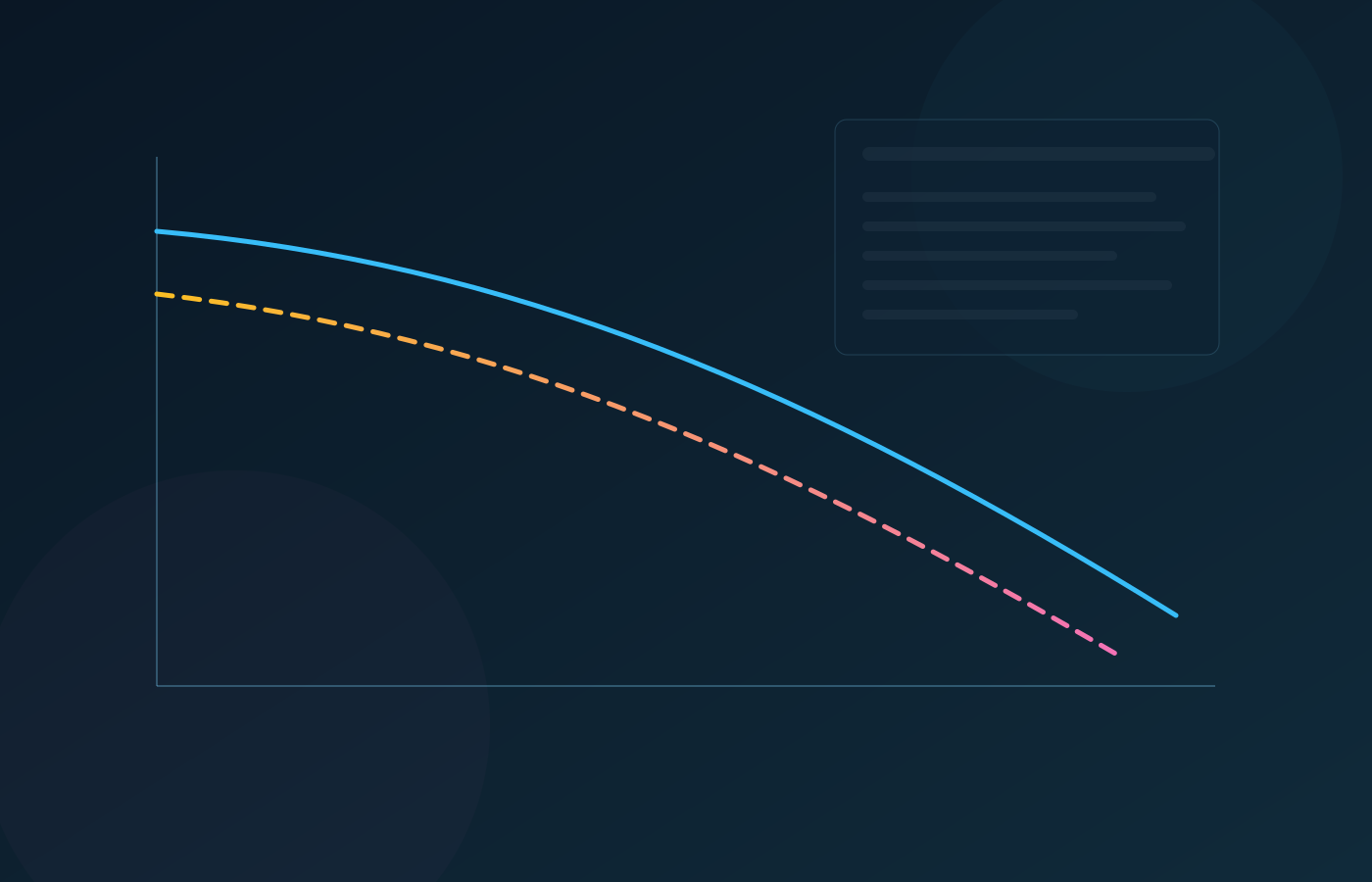
Each additional duty is solved for the speed it requires — as a percentage of the published hydraulic curve speed, as an equivalent frequency, and corrected at that speed for the fluid you are running. Manufacturer speed limits bound the family; a duty outside it is reported rather than manufactured.
07 — SAVED WORK
Available on the paid plans.
The selections for one job, with the duty points that produced them.
Candidate, duty, basis and resolved operating point, captured together rather than reconstructed later.
Change the duty and you get a new revision. The previous answer stays readable.

08 — PROFESSIONAL OUTPUT
The Pump Data Sheet carries the duty, the selected pump, the operating point and the basis it was solved on. The Performance Chart presents the curve and the duty as reviewed. The Variable Speed Chart presents the speed family, where one was solved. Each is generated from the reviewed selection and carries your organisation’s name. PDF downloads are on the paid plans.
WHAT IT IS NOT
It does not model piping networks, transients or surge — if you need that, you need a system-hydraulics tool as well. It is not a public manufacturer catalogue, not a quoting or CPQ system, and not a storefront. And it does not replace the engineer: it organises the calculation and the evidence, and a qualified professional reviews and approves the result.
The Free plan is the real engineering product: your own private pump library, real duty points, real fluids, variable-speed analysis and the resolved operating point. No card and no sales call — start engineering right away.